
At Knight Pest Control, our goal is to treat the entire accessible living area of your home—not just the bedrooms. While bed bugs are most commonly found in bedrooms, family rooms, and other areas where people spend extended periods of time, they are easily transferred throughout a home. Bed bugs are often called hitchhikers because they get on people and are carried from one room to another. They feed for a few minutes, then leave the host and hide in dark cracks and crevices for several days before feeding again. That’s why our heat treatments include bedrooms, living rooms, family rooms, bathrooms, closets, hallways, laundry rooms, and other accessible living areas.
We treat the Entire Home
Temperature
Time
Airflow
Monitoring
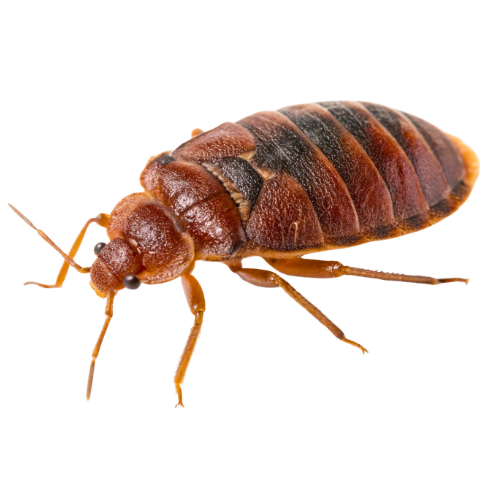
Effective bed bug heat treatment requires much more than simply heating a room and watching the thermostat. Every area of the treatment space must reach a lethal temperature. At Knight Pest Control, we work to bring every part of the room to at least 128°F, while typically operating between 130°F and 160°F.
Once the necessary temperature has been reached, we maintain that heat for an extended period. This process is known as soaking the room. The soak time is the amount of time the entire treatment area remains at or above the required lethal temperature. This is extremely important because even one cold spot can allow bed bugs or their eggs to survive.
Furniture, mattresses, wall areas, closets, flooring, and other hiding places must all receive adequate heat. Simply raising the air temperature for a short period does not guarantee complete elimination.
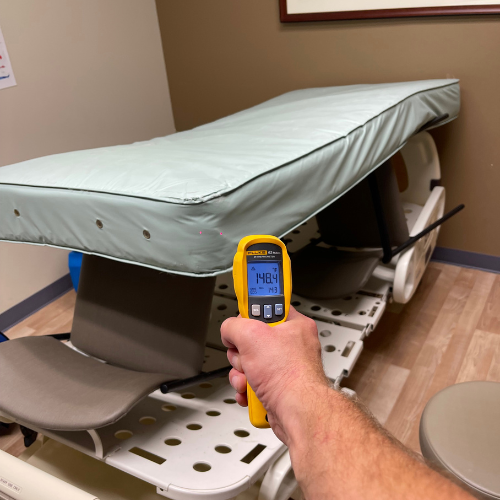
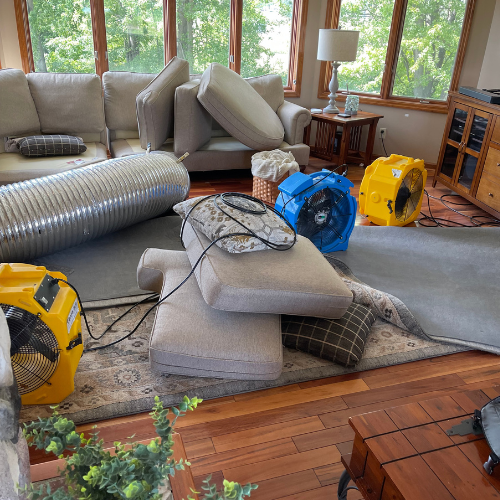
Throughout the treatment, we carefully monitor temperatures, reposition furniture, and adjust commercial fans to circulate heated air into difficult-to-reach areas. Our goal is to eliminate cold spots and ensure the heat reaches every part of the room.
This attention to detail is one of the things that separates Knight Pest Control from many competitors. We do not rush the process. We allow the heat to run long enough, hot enough, and efficiently enough to provide a thorough treatment.
Testimonials
Why We Treat the Entire Home
At Knight Pest Control, our goal is to treat the entire accessible living area of your home—not just the bedrooms.
While bed bugs are most commonly found in bedrooms, family rooms, and other areas where people spend extended periods of time, they can be transferred throughout a home. Bed bugs are often called hitchhikers because they get on people and are carried from one room to another. They feed for a few minutes, then leave the host and hide in dark cracks and crevices for several days before feeding again. That’s why our heat treatments include bedrooms, living rooms, family rooms, bathrooms, closets, hallways, laundry rooms, and other accessible living areas.
Bathrooms are less common hiding places than bedrooms or family rooms, but they are more likely to harbor bed bugs than kitchens, so they are included in our heat treatment process. Kitchens are also heated as part of the treatment. However, because bed bugs typically stay close to where people rest or sleep, they are less commonly found inside kitchen cabinets. In most cases, heating inside kitchen cabinets is not necessary unless the kitchen is directly adjacent to a heavily infested living area, such as a family room or recliner where people spend significant amounts of time.
Our objective is to ensure that every accessible area requiring treatment reaches and maintains the temperatures necessary for effective bed bug elimination.
A successful heat treatment is about more than simply heating the air. It requires careful planning, proper airflow, strategic fan placement, furniture repositioning, continuous temperature monitoring, and maintaining lethal temperatures long enough to eliminate bed bugs throughout the treatment area.
FAQs About Bed Bug Treatments
On average we’re at the home nine to ten and a half hours — that includes setup, running the heat, and
breaking everything down at the end. Plan to be out of the home from the time we arrive until that
evening, when the temperature has dropped to just below 100°F and it’s safe to return.
Here’s what the process looks like from start to finish:
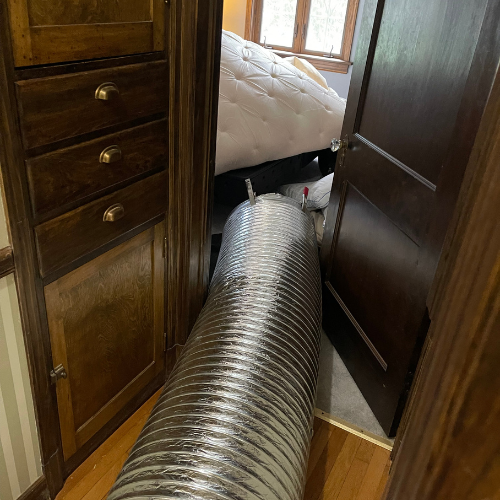
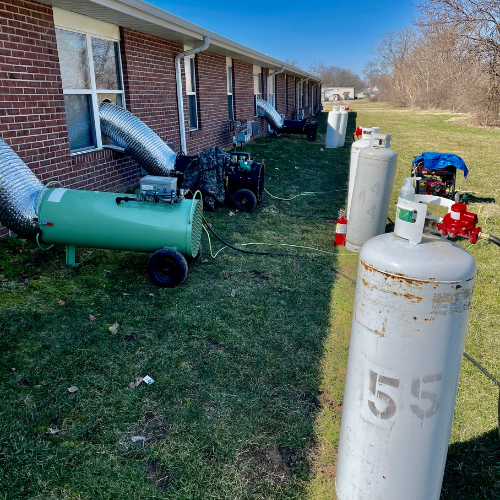
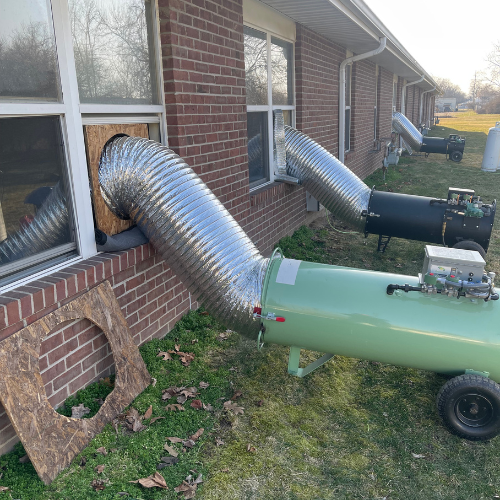
- Heaters: Our heating units sit outside. From there, 18-inch and 20-inch ducts run from the heaters through doors — or windows if needed — into the rooms being treated.
- Fans: Electric fans are plugged in and positioned throughout each room. Those fans push the incoming hot air into a vortex — forcing heat into every crack, crevice, wall void, and hiding spot where bed bugs could be living.
- Target temperature: We want 100% of the room at a minimum of 130°F. That’s not just the air in the middle of the room — that’s every corner, inside furniture, behind baseboards, everywhere.
Room-by-room process: We keep the duct running into each room for a minimum of 120 minutes to reach and hold that lethal temperature throughout. Then we pull the duct and move it to the next room — but the fans stay running, continuing to circulate the hot air that’s already built up. The temperature in the completed room drops slightly, but the majority of the space remains well above the lethal threshold.
Every room gets heated, but we target different temperature ranges depending on where bed bugs are most likely to be living:
- Bedrooms, family rooms, closets, and living areas: 130°F to 160°F. These are the primary target zones where bed bugs live and breed, so we push the heat harder and longer in these
- Kitchens and bathrooms: 130°F to 140°F. These rooms still get fully heated — bed bugs can be present — but we don’t need to push temperatures as high as the living areas.
Hitting the temperature is only half of it. We also soak each room — meaning we hold that lethal heat for a sustained period of time so it fully penetrates walls, furniture, mattresses, and every void where a bed bug could be hiding. Temperature alone isn’t enough. It is the combination of hot enough temperature, efficient airflow, the length of heat time or soaking, furniture manipulation, and attention to detail that guarantees complete bed bug elimination.
No. You do not need to throw away your beds, mattresses, bed frames, or any furniture. When Knight Pest Control does a heat treatment, the heat eliminates bed bugs completely regardless of what’s in the home — keep everything. Your mattress, your bed frame, your box spring, your recliner — all of it stays.
That said, bed bugs leave fecal staining on mattresses and upholstered furniture that simply won’t come out. Some customers choose not to keep a heavily stained mattress or recliner for cosmetic reasons, and that’s completely understandable. But that’s a personal choice — not a requirement of the treatment.
No. You do not need to move any furniture. We handle all of that. Part of our process is manipulating the furniture ourselves to make sure the heat thoroughly penetrates every area where bed bugs could be hiding. Just leave everything in place.
Leave them in place and simply unplug them. Bed bugs can get into the grills and vents of TVs and other electronics, so we make sure those items get thoroughly heated. Here’s our process:
Step 1: We leave TVs and electronics unplugged and in place at the beginning of the treatment until the lethal temperature can be reached to kill any bedbugs hiding in electronics.
Step 2: Once the TVs and electronics have reached the necessary treatment temperature, we either place reflective insulation over the TVs to protect them from additional heat or remove the TVs and electronics from the room.
Do not remove electronics before the treatment — they need to be heated. You do not need to unplug appliances in the utility room or kitchen.
Leave picture frames on the wall — do not take them down beforehand. We will heat them as part of the treatment. Depending on the frame, we’ll either leave them in place for the full treatment or take them down partway through.
- Oil canvas frames: These get heated for a shorter period of time, then we’ll remove them and bring them back into the home after the treatment is complete to avoid any heat damage.
Yes — heat has to be able to flow freely through the space to do its job. Overstuffed closets and drawers can trap cool pockets and prevent the heat from reaching every hiding spot. Here’s what we ask:
- Closets and drawers should be loosely packed, not jammed
Think of it this way: if you pack a dryer completely full of clothes and run it on high for 45 minutes, those clothes in the middle come out still damp. That’s because the heat couldn’t flow through. The same principle applies here — heat needs to move and penetrate, not just sit on the surface. A stuffed closet is no different than that packed dryer. Even a Thanksgiving turkey works the same way — pack the cavity too full and the center takes far longer to reach temperature than it should.
- Too many clothes? Remove the excess, wash and dry them on high heat, then seal them in a fresh bag and keep them out until the treatment is complete.
We have a detailed prep sheet that covers everything specific to your home — David will go over it with you before the treatment day.
Yes. Any aerosol cans or combustible items must be removed before we begin. This includes:
Important: Always inspect any item carefully for bed bugs before removing it from the home. The last thing you want to do is carry a bed bug out on an item and spread the infestation somewhere else.
- Medicines and prescription bottles
- Small compressed items: Soda cans, carbonated beverages, and anything similarly pressurized should be placed in the refrigerator, garage, or outside the home before These items can burst if left out in the open during heating.
- Aerosol cans, medicines, candles, and CO2 items: Inspect these carefully before removing them. Take them out before the treatment, and once the treatment is complete they can be brought back into the home. They’re removed for safety during the heat — not because of bed bugs.
- Heat-sensitive items — guitars, LPs, VHS tapes, and similar: These cannot be heated at all without being destroyed, so they must be removed before However, unlike aerosol cans, these cannot simply come back in right after treatment. Seal them in a bag and store them in the garage or basement for nine months. These items can’t be heat treated, so if a bed bug is on them, it needs to die of starvation over time. Nine months without a food source will do it.
- Firearms: Guns may remain in the home but must be Ammunition does not need to leave the home — it just needs to be out of the gun. No loaded firearms during treatment.
- Loose photos: Photos are heat sensitive and need to be inspected carefully and removed from the home before treatment.
- Lighters, candles, and similar items
Kitchens get heated, but they won’t get heated to as high of a temperature or for as long as the bedrooms and living areas. Items do NOT need to come out of cabinets unless we instruct you to. However, you do want to get heat-sensitive items OFF the kitchen counters, such as wine bottles, chocolates, and soap.
Depending on the size of the bathroom, the duct will be directed into the bathroom for a minimum of 45 minutes, with heat circulating throughout the room for at least 90 minutes total. Cabinet doors are opened during treatment so the heat penetrates inside them as well. Bed bugs can live in bathrooms and we treat every part of the room thoroughly. Before the treatment, remove the following from the bathroom:
- All aerosol cans (hairspray, deodorant, )
- Lotions and liquid cosmetics
- Fingernail polish and remover
- Any other pressurized or heat-sensitive items
These items need to be out of the house — not just in another room — before we begin.
Bed bugs can be transferred to vehicles. As a precaution, we can chemically spray your car as part of the treatment.
- Extreme temperatures work in your favor: In the dead of winter or the peak of summer, the temperatures inside a parked vehicle can get extreme enough to kill bed bugs on their That’s a good thing.
- Items in the car: Papers, bags, and any other items that have been in the vehicle should be bagged up and brought inside the home before the We will heat those items as part of the treatment.
- Shop vac the vehicle: Before the treatment day, thoroughly shop vac the interior of your car — seats, floor, trunk, and any crevices. Empty the shop vac bag when you’re done.
- Remove personal items: Clear all personal belongings out of the vehicle before we
- Chemical treatment: We spray your vehicle during the day while the heat treatment is The spray needs approximately 10 to 12 hours to dry, so plan accordingly for your vehicle access that day.